Sharenting Study 2026: Should Parents Post Photos of Their Kids Online?
Summary of Key Findings
CanadianParent.ca surveyed parents across Canada about whether parents should post photos of their children on social media. The results reveal growing discomfort around privacy, consent, and children's digital footprints.
Key findings include:
- 64.7% of parents said posting children online comes with significant privacy concerns
- Many parents reported posting less frequently than they did a few years ago
- Parents were deeply divided on whether children should have a say in what gets shared
- A growing number of families worry about AI, online safety, and long-term digital footprints
- Many respondents said they feel pressure from family and social expectations to post milestones online
As social media becomes more embedded in modern parenting, many Canadian families appear to be rethinking how much of their children's lives should be shared publicly online.
Social Media and Parenting Are Becoming Increasingly Complicated
For many parents, posting photos of children online once felt harmless — a simple way to share milestones, birthdays, vacations, and everyday family moments with friends and relatives.
But attitudes appear to be shifting.
CanadianParent.ca's 2026 sharenting survey suggests that many parents are becoming more cautious about what they post online, especially as conversations around child privacy, artificial intelligence, and digital safety continue to grow.
The debate around "sharenting" — a term commonly used to describe parents sharing information or photos of children online — has become one of the biggest modern parenting discussions in recent years.
While some parents view social media as a valuable way to connect with family and document memories, others increasingly worry about whether children can truly consent to having their lives shared online before they are old enough to understand the long-term implications.
According to the American Academy of Pediatrics, parents should carefully consider children's privacy and future digital footprints before posting identifiable information online.
Key Findings From the CanadianParent.ca Sharenting Survey
Privacy Concerns Are Now Mainstream
One of the clearest trends from the survey was that privacy concerns are no longer limited to a small group of highly cautious parents.
Key findings included:
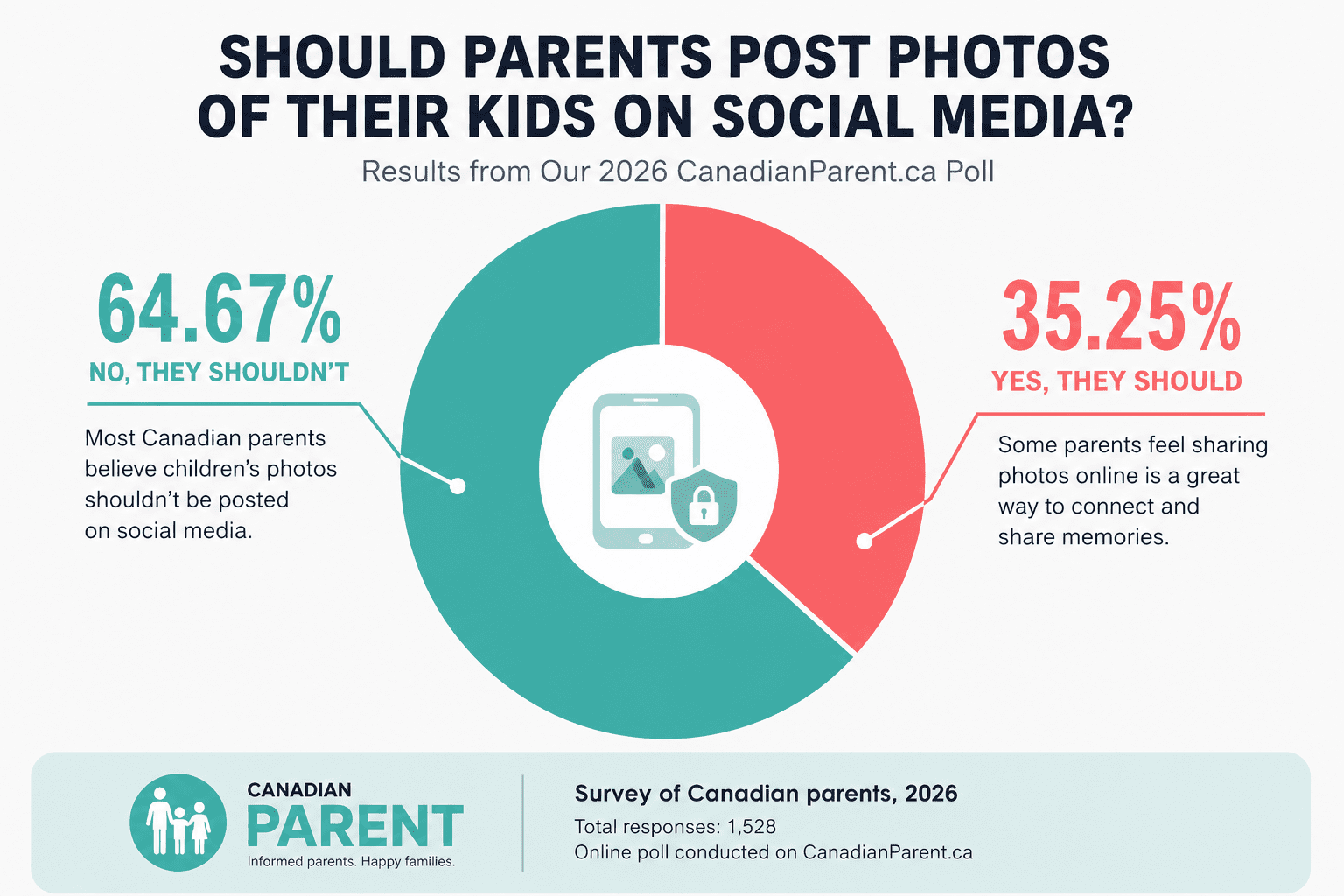
- 64.7% of respondents said they don't post their children online
- 35.25% of respondents said they do post their children online
Parents frequently referenced fears around:
- strangers accessing family photos
- long-term digital footprints
- identity theft
- AI-generated image manipulation
- future embarrassment for children
For many families, concerns appear to be shifting from "Is social media safe?" to "How much information is too much?"
Parents Are Divided on Consent
Another major theme in the survey was whether children should have input into what gets shared online.
Interestingly, many parents who still post online regularly said they avoid:
- embarrassing content
- tantrum videos
- bath photos
- school information
- identifiable location details
This suggests many families are already adjusting how they use social media, even if they have not stopped posting entirely.
Many Parents Say They Post Less Than They Used To
A growing number of respondents said their social media habits have changed significantly over time.
Several common reasons appeared repeatedly in responses:
- increased awareness of online safety
- concerns about digital permanence
- discomfort with public exposure
- changing attitudes toward influencer culture
- wanting children to control their own online identity later in life
Some parents said they now:
- use private accounts only
- avoid showing faces
- share photos through private messaging instead of public feeds
- limit posts to major milestones
This shift reflects a broader cultural trend where parents are becoming more intentional about how much family content appears online.
Why This Topic Resonates So Strongly With Modern Parents
Unlike many parenting debates, sharenting affects nearly every family in some way.
Modern parents face competing pressures:
- wanting to document memories
- wanting to stay connected with distant relatives
- wanting community and support online
- while also protecting privacy and safety
At the same time, social media platforms increasingly reward visibility and sharing. Parents can feel subtle pressure to post birthday photos, first-day-of-school pictures, vacations, and milestone moments because it has become normalized culturally.
But normalization does not necessarily remove discomfort.
One surprising trend from the survey was how many parents described feeling conflicted rather than strongly for or against posting altogether.
That emotional tension may explain why sharenting conversations have become increasingly common across parenting forums, schools, and social media itself.
The AI Factor Is Changing the Conversation
Artificial intelligence appears to be accelerating privacy concerns among parents.
Many respondents specifically referenced:
- deepfake technology
- facial recognition
- unauthorized image use
- data collection
- concerns about future AI tools
This represents a major shift from earlier online safety discussions, which tended to focus mostly on stranger danger or oversharing personal information.
Now, some parents are questioning whether children should have permanent digital footprints created before they are old enough to understand what that means.
The Canadian Centre for Child Protection has also warned parents about the importance of protecting children's online identities and personal information.
Expert Commentary
"Many parents grew up during the rise of social media and posted family moments without thinking much about long-term digital footprints," said Cory Arsic, Founder of CanadianParent.ca.
"What's changing now is awareness. Parents are asking more complicated questions about privacy, consent, AI, and what childhood looks like when so much of life exists online permanently."
He added that the survey reflects a broader shift toward more intentional online parenting habits rather than a complete rejection of social media itself.
Related Reading
Parents interested in digital safety and modern parenting trends may also find these CanadianParent.ca resources helpful:
- Baby Screen Time Study 2026
- Gentle Parenting Study 2026
- Daycare Survey 2026
- Should Parents Post Photos of Their Kids on Social Media? — Poll
Methodology
CanadianParent conducted this survey in 2026 using responses collected from parents through a poll.
The survey focused on parental attitudes toward posting children on social media, online privacy, consent, and digital safety concerns. Responses were collected from Canadian parents with children of varying ages.
Results were analyzed for recurring themes and broad behavioural trends related to social media use and parenting.
Cite This Study
CanadianParent.ca (2026). Sharenting Study 2026: Canadian Parents Are Rethinking Posting Their Kids Online. Available at: https://canadianparent.ca/sharenting-study-2026/