Major Parenting Divide: 66.3% of Canadian Parents Say They Wouldn’t Let Their Baby Try Sugar Before Age 1 or 2
A new Canadian parenting poll has revealed a major divide between families when it comes to introducing sugar to babies and toddlers. CanadianParent.ca surveyed more than 850 Canadian parents on whether they would let their baby try sugar before the age of one or two — and the results show a generation of parents trying to balance official health guidance with real-life milestones like first birthdays, holidays, and family traditions.
The findings reveal a clear majority who say they would hold off on sugar early, alongside a sizable group who say a little taste here and there is part of normal childhood.
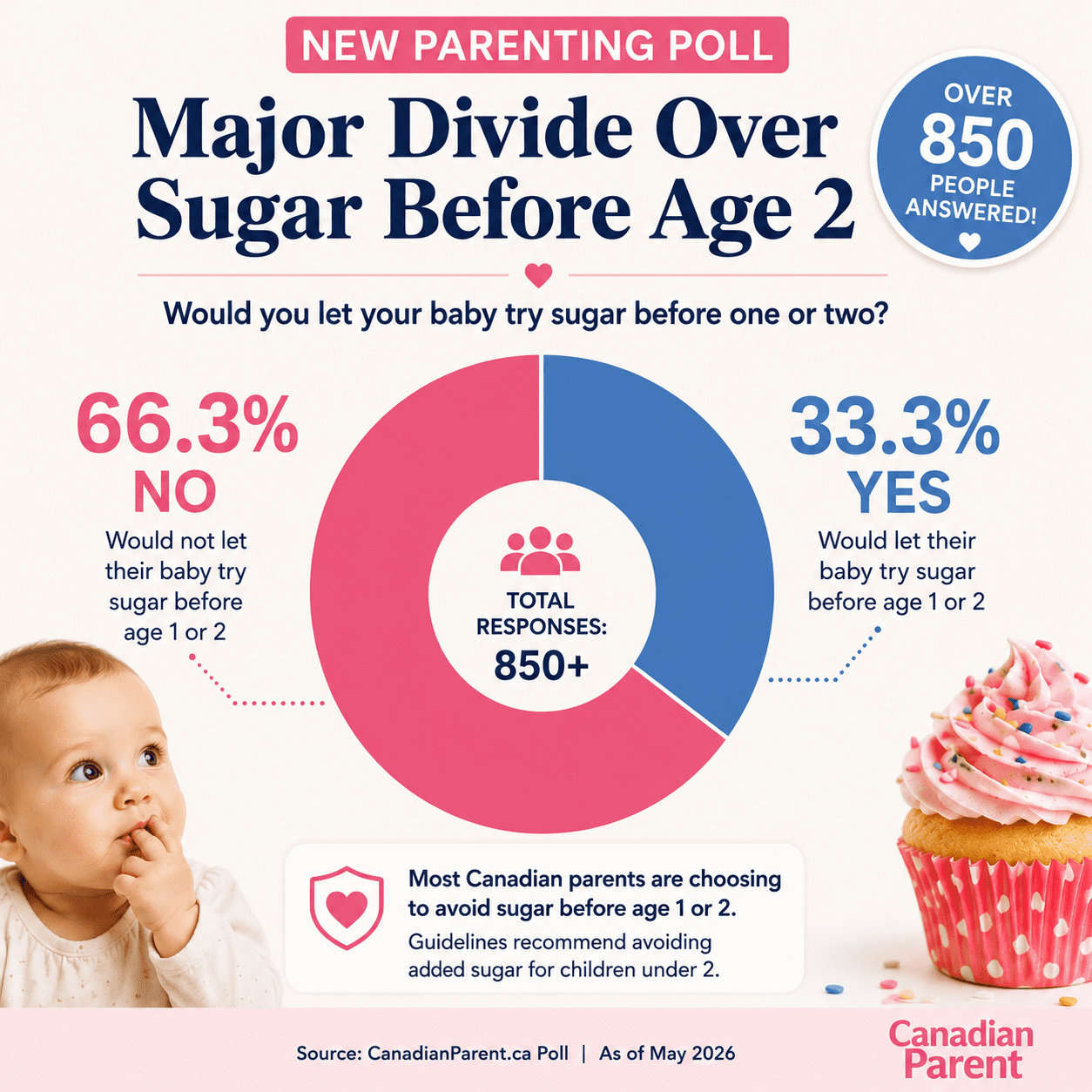
Summary of Key Findings
CanadianParent.ca surveyed over 850 Canadian parents on whether they would let their baby try sugar before the age of one or two. The results show that most parents are cautious about introducing sugary foods early, though a significant number believe moderation is acceptable.
Key findings include:
- 66.3% of parents said they would not let their baby try sugar before age 1 or 2
- 33.3% said they would
- Many parents appear to be balancing official health guidance with real-life milestones like birthdays and holidays
- The debate reflects larger parenting conversations around moderation, food culture, and "perfect parenting" pressure
Canadian Parents Are Divided on Sugar Before Age 2
Introducing sugar to babies has become a surprisingly emotional parenting topic online. While official recommendations generally advise avoiding added sugar before age 2, many parents feel that occasional treats are harmless — especially during milestones like a first birthday.
To better understand how Canadian families feel about the issue, CanadianParent.ca asked readers a simple question:
"Would you let your baby try sugar before one or two?"
The results suggest that most parents are cautious, but not everyone agrees.
Most Parents Say They Avoid Sugar Early
The majority of the survey respondents — 66.3% — said they would not allow their baby to try sugar before age 1 or 2.
This suggests many parents are aware of growing recommendations around limiting added sugars during infancy and toddlerhood. In recent years, health organizations have increasingly emphasized reducing sugary foods during early childhood.
The concern is not usually about a tiny taste of cake or ice cream alone. Instead, experts often focus on how early exposure to highly sweet foods may influence long-term eating habits and preferences.
One Third of Parents Are Comfortable Introducing Sugar Earlier
At the same time, 33.3% of respondents said they would allow their baby to try sugar before age 1 or 2.
For many families, this likely reflects a moderation-based approach to parenting and nutrition. Parents may feel that occasional treats during birthdays, holidays, or family gatherings are part of normal life and unlikely to cause harm.
Social media has also changed the conversation. Videos of babies trying cake, ice cream, or other sweets for the first time are now common online, making early sugar exposure feel more normalized than it may have in previous generations.
Why Experts Recommend Limiting Added Sugar Before Age 2
Organizations like the American Academy of Pediatrics and the CDC recommend avoiding added sugars for children under age 2 whenever possible.
According to guidance published by HealthyChildren.org, limiting added sugar early in life may help children develop healthier long-term eating habits.
Experts often point to several concerns:
- Babies and toddlers have very small nutritional needs, so sugary foods can replace more nutrient-dense options
- Early exposure to sweet foods may shape taste preferences
- High sugar intake later in childhood is linked to obesity and dental problems
- Many processed toddler foods already contain hidden sugars
Importantly, most recommendations focus on added sugars, not naturally occurring sugars found in foods like fruit or plain dairy products.
The Reality of Parenting Is Often More Nuanced
While guidelines are important, parenting decisions around food are rarely black and white.
Many parents who generally avoid sugar still choose to make exceptions for major milestones like:
- first birthday cake
- holiday desserts
- family celebrations
- cultural traditions
Others worry that being overly restrictive around sweets could unintentionally create unhealthy relationships with food later on.
This tension reflects a broader parenting trend: many modern parents are trying to balance evidence-based recommendations with a realistic, sustainable family lifestyle.
Social Media Has Increased Pressure Around Baby Feeding
Food decisions for babies now play out publicly in ways they never did before.
Parents regularly see:
- "perfect" homemade baby meals online
- debates over processed foods
- discussions about organic vs conventional foods
- criticism around sugar, snacks, and treats
As a result, even relatively small decisions — like whether a baby can have birthday cake — can start to feel loaded with judgment.
The survey results suggest many Canadian parents are navigating these pressures carefully, often trying to find a middle ground between ideal recommendations and everyday life.
What Counts as "Sugar" Anyway?
One reason this topic becomes confusing is that parents often define "sugar" differently.
For some families, sugar means:
- candy
- cake
- cookies
- juice
- ice cream
For others, it may include:
- sweetened yogurt
- packaged baby snacks
- flavored oatmeal
- toddler pouches
- sweetened cereals
Meanwhile, naturally occurring sugars in foods like bananas, berries, and milk are generally viewed differently from added sugars found in processed foods.
This distinction matters because many foods marketed toward babies and toddlers can still contain surprisingly high amounts of added sugar.
The Bigger Conversation Around Food and Parenting
Ultimately, this survey was not just about sugar. It reflects a larger parenting conversation happening across Canada right now.
Many parents are asking:
- How strict do we need to be with food?
- What actually matters long term?
- How do we balance health guidance with real life?
- Is moderation enough?
The results show that while most parents lean toward caution when it comes to sugar during infancy, there is still a sizable group who believe occasional treats are perfectly reasonable.
Expert Commentary
"We're seeing more parents become aware of official guidance around added sugar, but many families are also trying to avoid turning food into a source of anxiety or guilt. The challenge for parents today is balancing evidence-based recommendations with real-life family experiences."
— CanadianParent.ca
Methodology
CanadianParent.ca surveyed readers through an online poll asking the question: "Would you let your baby try sugar before one or two?" Responses were collected from Canadian parents and readers of CanadianParent.ca. At the time of publication:
- 66.3% answered "No"
- 33.3% answered "Yes"
Poll results reflect reader opinions and experiences and are intended for informational and discussion purposes.
Cite This Study
CanadianParent.ca. "Would You Let Your Baby Try Sugar Before One or Two?" CanadianParent.ca Parenting Poll, 2026. Available at: CanadianParent.ca.
FAQ
Should babies have sugar before age 2?
Most health organizations recommend limiting added sugars before age 2. However, many parents choose moderation-based approaches for special occasions.
Is fruit considered sugar for babies?
Fruit contains naturally occurring sugars and is generally viewed differently from foods with added sugar like candy or desserts.
Why do experts recommend avoiding added sugar for babies?
Experts say limiting added sugar may help support healthy eating habits, dental health, and balanced nutrition during early childhood.
Can babies have cake on their first birthday?
Many parents choose to allow birthday cake in moderation, even if they otherwise limit sugary foods. Parenting approaches vary widely.
Are packaged baby snacks high in sugar?
Some baby and toddler snacks can contain added sugars, even when marketed as healthy. Reading ingredient labels can help parents make informed choices.
More Parenting Polls, Giveaways, and Freebies for Canadian Families
Looking for more parenting conversations, giveaways, and money-saving resources? CanadianParent.ca regularly shares new parenting polls, free baby offers, and family giveaways designed specifically for Canadian parents.
You may also enjoy:
- Our latest parenting polls and data-driven studies on topics like screen time, gentle parenting, daycare, and sleep training
- Free samples and baby freebies available across Canada through our popular Free Baby Samples Canada guide
- More data-driven parenting discussions like: